Wondering How to Have Good Eye Contact On Camera?
We all know that eye contact is extremely important for meaningful communication. When videotaping an on-camera spokesperson, the question of where the talent should be looking often comes up.
To answer the question, think about this. Do you trust someone who won't look you in the eye when they're talking to you? Imagine having a conversation with someone and when they speak to you, they're either looking down at your clothing or looking off at something in the background behind you. How would you feel? Would you relate to this person?

Now, what if that same person is looking you squarely in the eyes while they speak with you. Would you trust them more? Most likely!
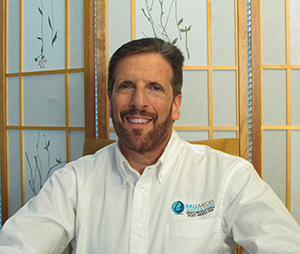
With video, when the person speaking on-camera is looking directly into the lens, it gives the viewers that the sense that the spokesperson is speaking directly to them. For example, take a look at the image above. This doctor is maintaining great eye contact with the camera.
So if it’s a matter of relaying information directly to each member of the viewing audience, looking into the lens is the best choice.
While using cue cards can keep costs down, you'll potentially lose some of the effectiveness of your video.
Here's a potential problem. How easy is it to look into a camera lens and speak? If you’re a professional it’s fairly easy, but if you’re not used to doing this it’s difficult because the natural human temptation is to look for approval or a reaction. So on-camera talent will often look off-camera to where the director is stationed to seek approval. When that happens, eye contact with the camera is broken, and it looks awful. At best, they look shifty, at worst you need to stop and record another take.
For this reason, I always recommend a TelePrompter if eye contact with the audience is wanted.
 A TelePrompter is a device mounted in front of the camera lens, and by using a one-way mirror, it allows the spokesperson to read the text of their script while maintaining eye contact with the camera lens and viewers.
What about during on-camera interviews?
Where the on-camera person is looking depends on your audience. If the interviewee is speaking directly to the audience again, maintaining eye contact with the lens is important.
Regardless, the approach more commonly used is an off-camera gaze. This gives the impression to the viewer that the person being interviewed is having a conversation with an interviewer sitting off to the side of the camera.
To accomplish this, the person doing the interviewing takes a position (sitting or standing) beside the camera. The person being interviewed looks at the interviewer while speaking. This looks best when the person asking the questions stands right beside the camera. This allows the viewer to see the complete face of the interviewee. A profile angle tends to distract the viewer since they're unable to get a full view of the interviewee's eyes or the expression on their face.
Again, the issue of trust and credibility comes into question. We find that this approach lends itself to increasing credibility, as the interviewee often is perceived as an expert, rather than someone reading lines.
Here's my conclusion regarding eye contact on camera:
Where you look can make a huge difference to the ultimate impact of your video. What you choose to do should be planned for, and should depend upon what you're trying to accomplish, and what image you're trying to project.
 About the Author & His Company: Greg Ball, is President of Ball Media Innovations, Inc. Prior to starting the company, he ran the Burger King World Headquarters video operation.
Ball Media Innovations specializes in producing videos for businesses as well as the medical community. This includes web videos, marketing and training videos, social media videos, convention, conference, and trade show videos.
Do you have a project you need help with? We'd love to work with you!
Give us a call or use the form below. We'll be happy to give you a free quote.
Check out this page for more information on our Miami video production company. If you're in the Central Florida area, check out our Orlando video production company page.
© Copyright 2022 Ball Media Innovations, Inc. All rights reserved. Any reproduction of the written contents or images on this website without prior written consent by Ball Media Innovations, Inc. will be prosecuted. This site is protected by Copyscape.